Neuromarketing Comes with Truths You Can't Even Admit to Yourself!
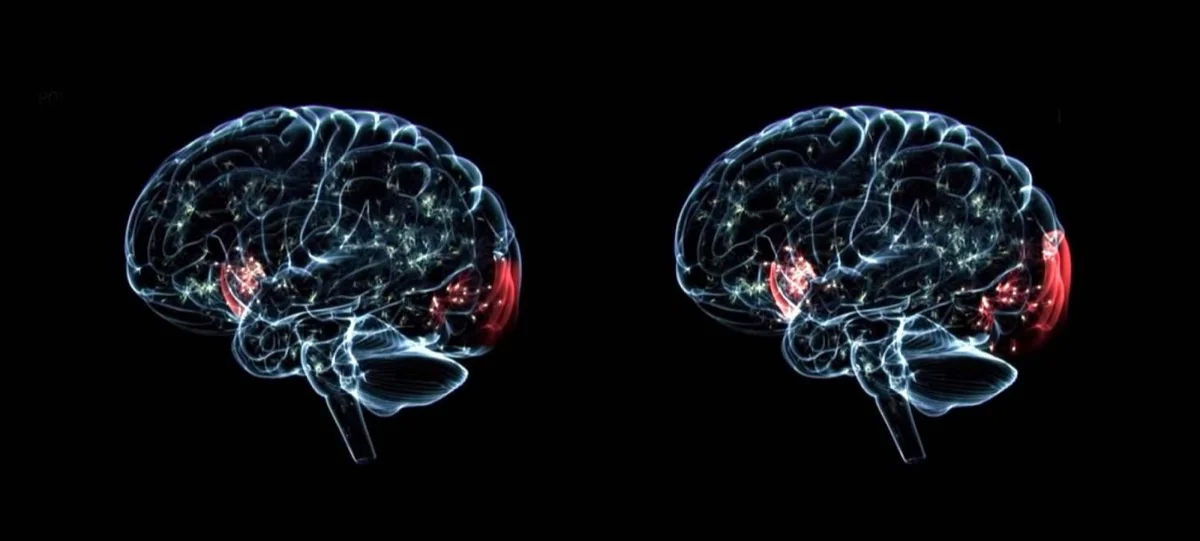
This post was first published on Medium: https://medium.com/@marketingholmes/nöromarketing-kendinize-dahi-i̇tiraf-edemediğiniz-gerçeklerle-geliyor-6ab5436f45df
“People don't think what they feel, don't say what they think and don't do what they say.” — David Ogilvy
We are now a long way from a world in which brands could easily sell every product they made. It is a fact that competition, fired up by advancing technology, falling production and distribution costs and a growing number of media channels, has dragged brands into a war like no other. Amid all this turmoil, it is fair to say that marketing activities run on theories built around the idea that consumers make rational decisions are now being questioned to a great extent. Yes, we all make purchasing decisions with the aim of maximizing our own benefit, but contrary to conventional wisdom, when we do so we act on our emotions, not on rational decisions. Neuromarketing lays this truth bare with scientific evidence, before we have even admitted it to ourselves. We talked about this topic, which has the potential to overturn everything we take for granted, with Dr. Yener Girişken and Kılınç Orhan Erdemir, two of Turkey’s pioneers in neuromarketing.
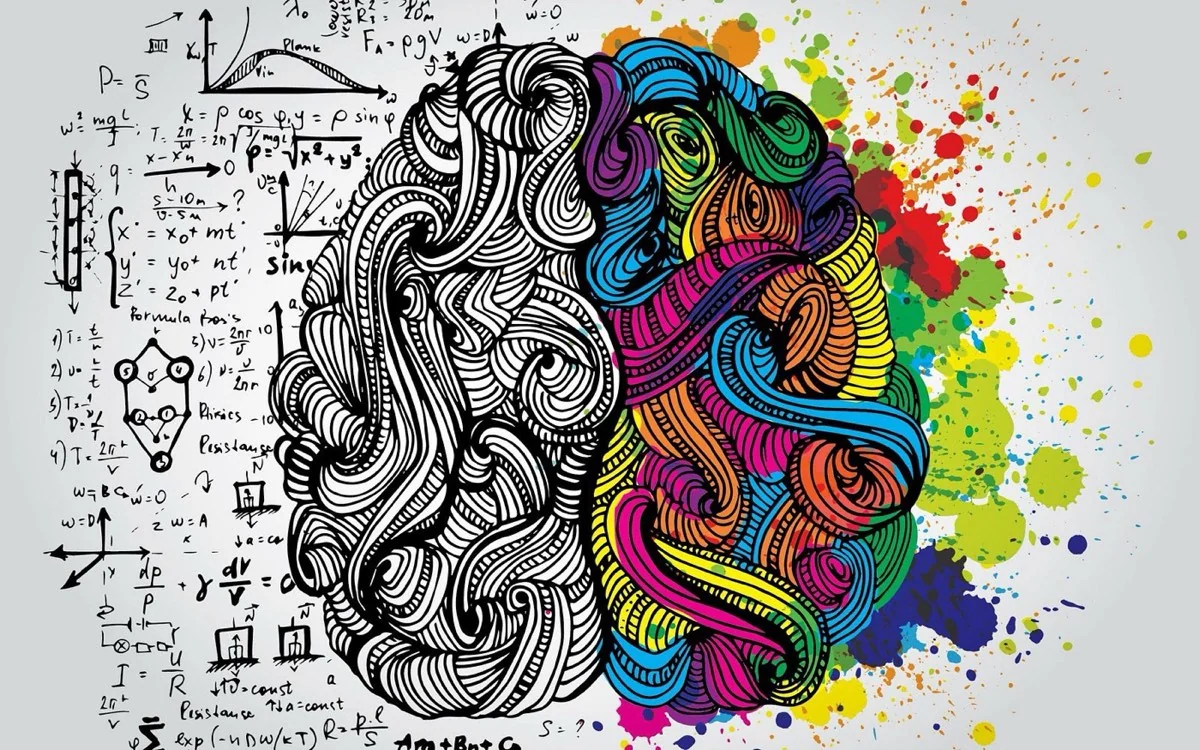
The fact that brands can gain insights through neuromarketing that would be impossible to obtain with traditional research methods is very important in showing how much these techniques could change marketing thinking in the years ahead. In this regard, I need to mention a study on a Vestel commercial carried out by Think Neuro, Turkey’s first neuromarketing company, which conducts its research with both techniques already used around the world and techniques it has developed itself. In the commercial, a washing machine turns into a robot, and meanwhile a little girl picks up a pair of scissors from the table and hands them toward the robot. A while later the commercial ends, and the participants in the study are asked whether there was anything in the ad that affected them negatively. The participants state that there was nothing negative, but measurements taken with EEG and eye-tracking devices reveal that the participants perceived the scissors changing hands as a negative element (because of a superstition common in Turkish society) and that from that moment on their interest in the ad hit rock bottom.Reaching this conclusion, which would be impossible with traditional methods, through neuromarketing techniques and drawing a foresight from it is extremely important for designing the commercials brands spend millions on far more accurately. A similar example can be given in the context of voice-overs used in commercials. Dr. Yener Girişken describes the research findings on this as follows: “According to measurements made with nearly 1,000 commercials, we can see that people pull away from an ad when the voice-over starts. What makes the difference here is whether the voice-over fits the integrity of the ad. When the viewer sees the voice-over and the ad as a structure with an emotional bond, no negative perception is observed. If the voice-over comes on top of an emotional bond that has already been built, if viewers see an ad within the ad and feel that the fun part is over and the boring moments have begun, we can see a negative effect forming. Communication can only be effective if it starts consistently and ends consistently.”
At this point we also need to look at how neuromarketing is perceived by people and by brands. Dr. Yener Girişken says the following on this: “Neuromarketing is the expression of a paradigm shift. Neuromarketing is not research to find a buy button. Just as people feared marketing and approached it with suspicion when it first emerged as a concept, the same is true of neuromarketing today. Neuromarketing is not a system capable of taking data from anyone without their consent. In the debates on ethics, we can see a lack of information. As people try neuromarketing, they will see that other methods based solely on self-reporting are not all that effective. One of the things we are lucky about today is that Turkey is one of the strongest neuromarketing markets in the world. The most basic reason for this is that brands carry out scientific and academic work together with empirical work. Once companies working with neuromarketing techniques demonstrate how they benefit, the growth of this through word of mouth (WOM) also creates a leverage effect. And this leads to a big change.”

It would also be wrong to think of neuromarketing as a tool used only by brands. This technique, which we see being used in very different fields today, was also applied at the level of political parties in our country ahead of the 2015 elections. This study, which was also covered by The New York Times, offers very valuable information in terms of its results. Mr. Erdemir talks about the research carried out by Neuro Discover, one of Turkey’s leading neuromarketing companies, as follows: “The method, known in the literature as Neuro Politics, is, as you can tell, used in the field of political communication. In the research we conducted in March–April 2015 on politician profiles and rhetoric analysis, two groups were formed: one made up of AK Party voters and the other of opposition party voters, their numbers allocated according to the distribution in the elections. Participants were shown photographs of politicians from all sides and of people connected to politics, and in the meantime motivation (approach/avoidance) values were collected from the electrical activity in the participants’ brains using EEG devices. In addition, the dilation and contraction of the participants’ pupils, changes in the sweat gland function at their fingertips, their heart rhythms and changes in their facial expressions were recorded simultaneously. In the rhetoric research, participants were shown excerpts from various speeches by Ahmet Davutoğlu, the prime minister at the time, and we observed which sentences and words excited them, which sentences bored them and even put them into a sleep-like state. Based on this data, we made some inferences about emotional engagement. Rhetoric analyses provide important data that shed light especially on effective public speaking and on writing the right speech texts. Davutoğlu’s use of a florid, heavy literary language in some of his speeches killed all the participants’ interest and excitement and even put some of them into what we call a drowsy state, an extreme loss of attention or sleep. Rhetoric and profile analyses conducted on voters offer a level of fine detail you could never get from surveys when it comes to revealing emotional engagement without asking them. From this perspective, I believe that neuropolitical research will develop all over the world in the coming period, provided it is in expert hands.”
We also need to mention the joint study titled ““The key tricks that make commercials effective”, conducted by Neuro Discover in collaboration with GfK Turkey. Mr. Erdemir talks about the very important findings of the research, in which 17 emotional commercials were examined, as follows: “Scenes in which several people interact, rather than one person alone, have a more motivating effect on people. They increase positive motivation and raise the desire to buy. In food consumption, however, individual consumption scenes are more effective. If you are marketing a food product, show it being eaten or drunk with appetite in the commercial! That’s the key trick to influencing viewers. Fast-moving action scenes raise emotional interest and heart rate, but if these scenes don’t have a tight connection to the brand, they can overshadow your brand and the message you want to deliver.”
We can see that neuromarketing, backed by scientific evidence, has begun to change the world of marketing with a momentum that overturns everything we take for granted. From brands to political parties, we can see neuromarketing studies in every field where people’s decision-making processes play a role and that make up life itself. With growing experience, advancing technology and new techniques, I think neuromarketing studies will become far more effective in the coming years and will reveal truths yet to be discovered. In a world where people don’t think what they feel, can’t express what they think and don’t do what they say, neuromarketing is one of the most advanced technologies we have today for discovering new worlds.
* This article was first published in the August issue of Turkishtime.
You can also follow me on Twitter: @MarketingHolmes