The real difference will show in where we point the tool
Plot twist: In the coming period, what sets companies apart won’t be people’s access to AI, but what organizations find worth asking.
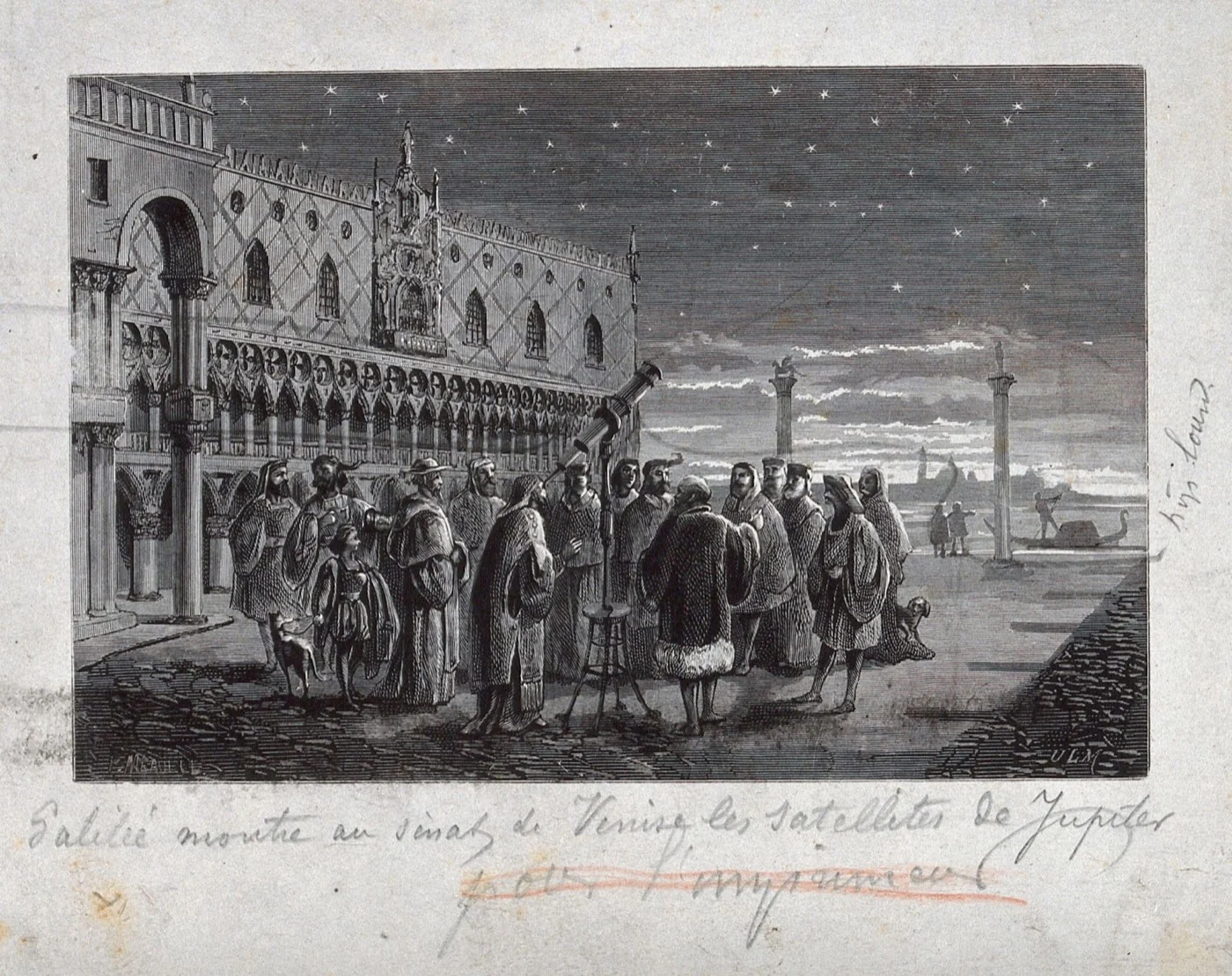
About 400 years ago, when Galileo turned his telescope to the sky, what he was doing wasn’t just seeing farther. He used the tool in his hands to test one of the most fundamental assumptions of his time. His move wasn’t about the device; it was about the choice of problem: Did the universe really work the way we had been told?
When Galileo turned his telescope to Jupiter, the first thing he saw was a few tiny points of light. Someone else might have taken them for ordinary stars. But he tracked the same points for days; he saw that they changed position but never left Jupiter. In the end he understood that they weren’t stars but four celestial bodies orbiting Jupiter: the Galilean moons we know today as Io, Europa, Ganymede and Callisto.
What would have been a small detail to anyone else became, for Galileo, a crack that called the existing model of the universe into question: Not everything in the sky revolved around the Earth!
Today we stand at a similar threshold with AI.
More and more, we all have access to the same tools, the same models and similar production power. Writing text faster, putting together better-looking presentations or producing comprehensive analyses in a few minutes creates a less and less distinct competitive advantage.
The real difference will show less in how well we use the tool in our hands than in where we point it. Which problem we find important, in which data we see a meaningful signal, how accurately we can read the real need behind what the customer says: these will become more and more decisive.
Because in a sense, AI shows all of us the same points of light. But telling which of those points is an ordinary star and which is a sign that will make us question the existing model still comes down to our judgment.
And perhaps the most important shift of the coming period will happen exactly here. As AI democratizes the capacity to produce, producing itself will become a less and less scarce skill. What will be scarce is choosing the right problem, seeing the signal in the noise, and being able to understand why what we see matters.
That’s why I think that in the AI era, competitive advantage will be built not by those who use AI the most, but by those who understand their own field, their customer and the business deeply enough to point AI at the right questions.
In the coming period, what sets companies apart won’t be people’s access to AI either, but what organizations find worth asking.